The Evolving Landscape of AI-Driven Referral Traffic in the North American Ecommerce Sector

The digital retail landscape is currently undergoing a structural shift as artificial intelligence platforms emerge as a primary source of consumer discovery, with data from late 2026 indicating that AI-driven referral traffic to major ecommerce websites has reached approximately 5% of total volume. This marks a notable increase from the start of the year, when industry leaders reporting to Digital Commerce 360 noted that AI-related referrals accounted for less than 2% of their total site traffic. As these generative AI models and large language models (LLMs) become increasingly integrated into the daily search habits of consumers, retailers are finding that while the raw volume of traffic remains a relatively small fraction of their overall digital presence, the quality and conversion potential of these users are significantly higher than those arriving through traditional organic or paid search channels.
A Chronological Overview of AI Referral Growth
The evolution of AI as a traffic driver has accelerated rapidly throughout 2026. At the beginning of the year, the industry was in a state of experimental observation. Retailers were largely uncertain about how to categorize or measure traffic stemming from tools like ChatGPT, Claude, or Perplexity. By July 2026, the trend had shifted from anecdotal observation to quantifiable data, with reports showing a 62% year-over-year increase in AI-associated referral traffic.
This period of growth was not merely quantitative; it was marked by a qualitative shift in consumer behavior. Data indicated that shoppers referred by AI tools generated 53% more revenue per visit than their counterparts. This "AI-referred" cohort demonstrated a propensity for high-intent shopping, characterized by shorter decision-making cycles and more refined product research. As the year draws to a close, retailers are moving from a state of curiosity to one of strategic optimization, attempting to align their SEO and content strategies with the specific ways in which LLMs synthesize and present product information to users.
Analyzing the High-Intent Consumer
One of the most consistent findings across the industry in late 2026 is the superior conversion efficiency of AI-referred traffic. While traditional search engine optimization (SEO) focuses on capturing a broad net of users, AI traffic acts as a highly effective filter.
Nishit Mehta, founder of La Joya Jewelry, has observed this phenomenon firsthand. At the start of the year, his firm saw 2% to 3% of referral traffic originating from AI; by September, that figure had climbed to 6%. More importantly, Mehta noted that conversion rates for these specific users are in the double digits, significantly outpacing the performance of standard organic traffic. For a retailer whose typical site-wide conversion rate might hover around 3%, the AI-referred segment has demonstrated rates exceeding 13%.
The logical inference drawn from these metrics is that AI serves as a "trusted advisor" in the consumer journey. When an LLM recommends a product or a brand, it inherently provides a layer of social proof or expert validation. Consequently, the consumer arrives at the retailer’s website with their research already completed and their trust already established, reducing the friction typically associated with the "awareness" and "consideration" phases of the traditional marketing funnel.
Industry Perspectives: Diverse Experiences Across Retail Sectors
The impact of AI referral traffic is not uniform across all retail segments. Differences in product complexity, price points, and the nature of the shopping experience contribute to varying adoption rates and outcomes.
For Bero, a brand operating in the non-alcoholic beverage space, the growth has been more tempered. Hyojin Park, senior director of ecommerce solutions and growth, noted that AI referral traffic remains below the 5% threshold. Park’s assessment highlights a persistent challenge in the industry: the difficulty of precise attribution. Current analytics platforms often struggle to delineate AI-referred traffic from standard direct or organic traffic, leading to under-reporting. Park observes that while AI has the potential to become a dominant force, the growth curve for her sector has not mirrored the exponential, "hype-driven" trajectories seen in other segments of the tech economy.
In contrast, the furniture retail sector, represented by Povison, has seen a more robust integration of AI. Founder and CEO Ayden Lin reports that AI platforms are becoming a primary engine for growth, accounting for 5% of total traffic and projected to reach 10% by early 2027. Lin’s experience suggests that in categories involving high-consideration purchases—where customers require detailed specifications and value comparisons—AI tools are uniquely positioned to assist. These users are described as highly informed, seeking a synthesis of utility and price that generative search is uniquely equipped to provide.
The Nuance of Conversion and Average Order Value
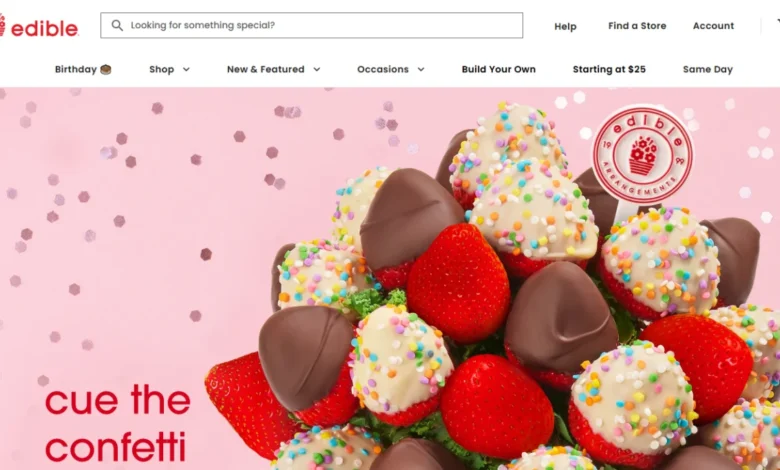
While conversion rates are generally higher, the impact on Average Order Value (AOV) remains a point of divergence among retailers. Erica Randerson, chief digital officer at Edible Brands, reports that while AI traffic constitutes less than 10% of their total referrals, it is consistently more valuable than average. Specifically, Edible Brands has seen an AOV increase of $5.50 for customers arriving via AI compared to the site average.
However, Randerson offers a sobering perspective on the conversion metrics. While the AI-referred conversion rate is strong at over 5%, it remains lower than the company’s overall site average of 10%. This is attributed to the specific nature of the gifting market, where Edible Brands enjoys a high volume of repeat, intent-driven traffic that is difficult to replicate through third-party AI discovery. This serves as an important reminder: AI traffic is not a monolith, and its effectiveness is heavily mediated by the brand’s existing market position and the specific intent of the consumer.
Strategic Implications for 2027 and Beyond
As the industry looks toward 2027, the implications of these trends are becoming clear. The "AI-as-a-referral-source" model requires a shift in how retailers approach content strategy. Traditional SEO was about keyword density and backlink profiles; the new paradigm is about "answer optimization." Retailers must ensure that their product data, brand story, and value propositions are structured in a way that LLMs can accurately parse and prioritize.
The data gathered from the Top 1000 Database, which tracks North America’s largest online retailers, suggests that the firms currently succeeding in this space are those that prioritize data hygiene and transparency. By providing clear, structured information about product benefits, pricing, and availability, retailers increase the likelihood of being cited by AI models as a primary resource for consumers.
Furthermore, the rise of AI traffic necessitates a change in analytical frameworks. As Hyojin Park noted, the current lack of advanced, granular reporting on AI referral paths is a significant hurdle. Retailers will need to invest in better tracking technologies to understand which specific AI platforms or search queries are driving the highest-quality traffic. Failure to do so will leave a significant portion of the customer acquisition funnel in the dark.
Conclusion
The transition from a 2% to a 5% referral share in less than a year is a significant indicator of the changing behavior of the modern consumer. While it is premature to declare that AI will replace traditional search engines, the data suggests that it is becoming a critical, high-converting channel that can no longer be ignored.
For retailers, the focus for the coming year will be on two fronts: first, refining their digital infrastructure to ensure they are "discoverable" by generative AI, and second, developing internal analytical capabilities to accurately measure the ROI of this traffic. As the technology matures, the "AI-referred" segment is likely to grow from a niche performance driver into a cornerstone of digital commerce strategy. The businesses that thrive will be those that treat AI not as a threat to traditional search, but as a new, highly effective channel for connecting with the informed, intent-driven consumer of the future.